
Medieval Myth Busting
In this blog, Cathryn takes a look at some popular myths about the medieval world.
Medieval people used spices to cover the taste of rotten meat
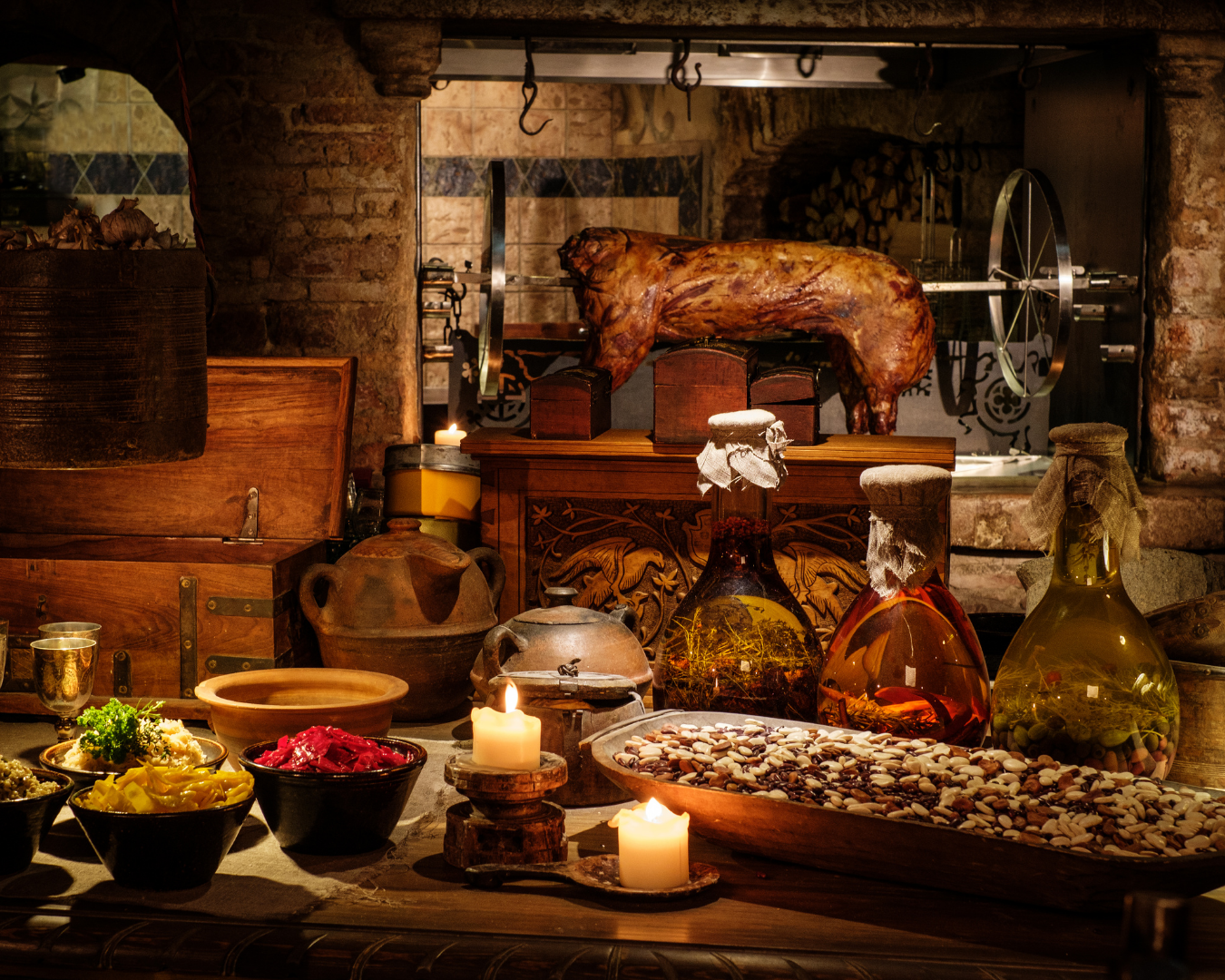
Medieval kitchen table with meat and other foods
Medieval people did not use spices to cover the taste of rotten meat. None of the spices available at the time would have done this. Spices were a highly expensive luxury item at the time, costing several shillings per pound. So, they certainly wouldn’t have been wasted on something like covering the taste of gone-off meat. Since refrigeration wasn’t available at the time, most meat was sold and eaten soon after slaughter. Food perseveration techniques such as salting and smoking were also known about at the time, so why would any medieval person be eating rotten meat? Another reason why medieval people wouldn’t be eating rotten meat is that they knew that doing so could make you ill. Whilst they were wrong about the mechanics of how illnesses spread, at the time it was believed that miasma or ‘bad air/ smells’ spread disease, they were correct in thinking that eating gone-off food wasn’t a good idea. Medieval people used spices in their cooking for the same reason we use them in our cooking, they liked the taste.
Medieval people didn’t bathe/ were smelly
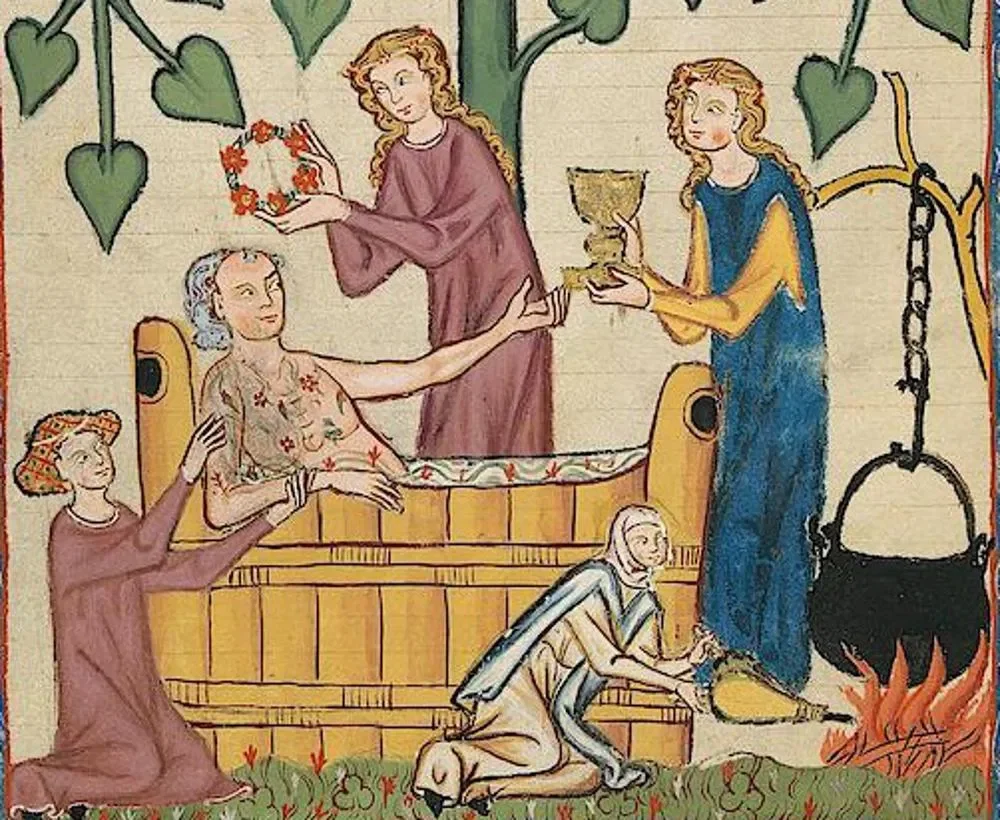
Bathing in the Codex Manesse – UBH Cod. Pal. germ. 848 via https://www.medievalists.net/
Medieval people were cleaner than what we may think.
First, let’s consider the difference between bathing and washing. In its’ most literal sense, bathing is washing yourself in a tub of water. Whereas washing implies any form of cleaning. The work of heating water, filling bathtubs etc. meant that medieval people did bathe themselves less than we do. However, they did still wash themselves more often, than is often thought, probably taking what we would call sponge baths. As mentioned above, medieval people believed that bad smells could spread disease. So, to them staying clean was vital for good health. Public bathhouses could also be found throughout the medieval world, in 1200s Paris, for example, there were over 30. Whilst bathhouses were places to get clean, many like those in Southwark were used as fronts for prostitution. It was this, alongside outbreaks of plague and the spread of syphilis from the New World which led to the closure of many bathhouses and a reduction in bathing from the 1500s.
The next section deals with child mortality. If you don’t want to read this please skip to the next section.
Medieval parents weren’t attached to their children because of high child mortality rates
Whilst mortality rates, of both adults and children were higher during the medieval period it does not mean that parents at the time cared less for their children then we do today.
Coroners’ rolls from the time tell us how medieval parents reacted when their children died. In one example dating from around the late 1200s, a boy named Robert died after being struck by lightning. His father is described as ‘running distraught across the field.’ Most parents today would react in a similar way if their own child was stuck by lightning. Whilst death was more common at the time, it did not mean that it was easier to deal with. Medieval people weren’t robots, and human emotions haven’t changed over the centuries. Grief was just as difficult for medieval people to deal with as it is for us today.
The Medieval world was dull and brown
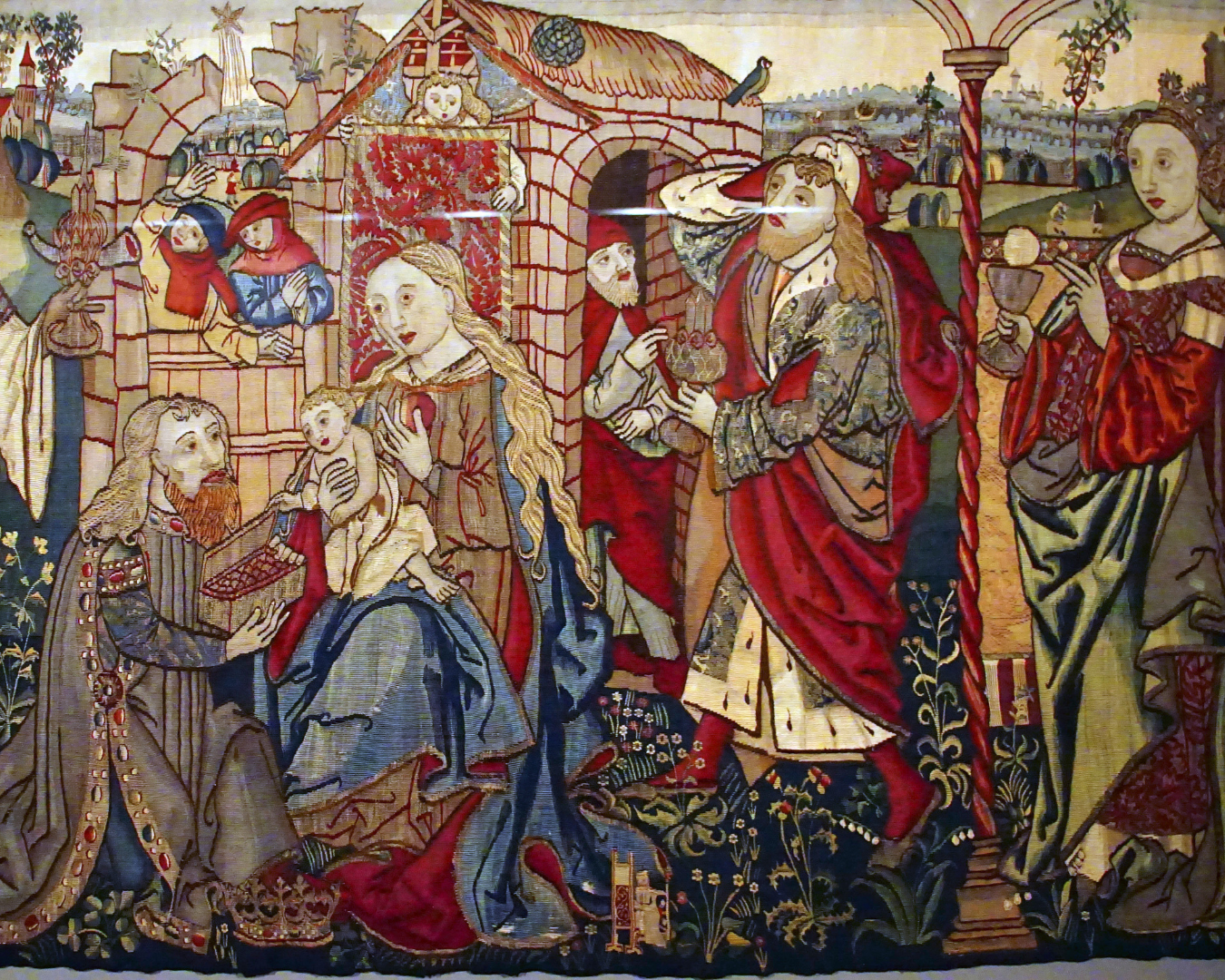
Medieval Religious Tapestries, Bavarian National Museum
Despite what the costume designers of Hollywood films would have us think, medieval people did not dress in brown, dull clothing all the time. People of all social classes wore colourful clothing. Wealthier people could afford expensive and brilliantly dyed clothing, whilst lower down the class scale, clothing was duller and faded more quickly, but it was still more colourful than what is popularly believed. Compare works of medieval art, in particular illuminated manuscripts such as books of hours to films and tv set in the Middle Ages and you will see that the medieval world far from dull and brown, was in fact full of colour.
There we have it, some of the more popular myths about the medieval era busted.